The digital twin is a term derived from common parlance that covers two different types of 3D models. The first is the BIM as-built model, in which an update is made from the planning method. On the other hand, the entire building data is subsequently recorded using surveying methods, interpolation and digitization. In both cases, however, continuous recording of changes is necessary in order to avoid subsequent deviations between reality and the 3D model. In each case, the result is the best possible match between the existing architecture, building services, operational information and processes and the 3D building model created in order to enable a wide range of practical applications in general building operations and CAFM in particular, and to increase added value for users and owners.We are happy to assist you in making decisions regarding the type, scope and necessity of such a digital twin in any use case, as well as any alternatives. Regardless of whether you are still in the conception phase, in the middle of construction or already planning in existing buildings, because the various possible applications within building operation, revitalization, repair and deconstruction are far-reaching and confusing.
BIM-AS-Build further development
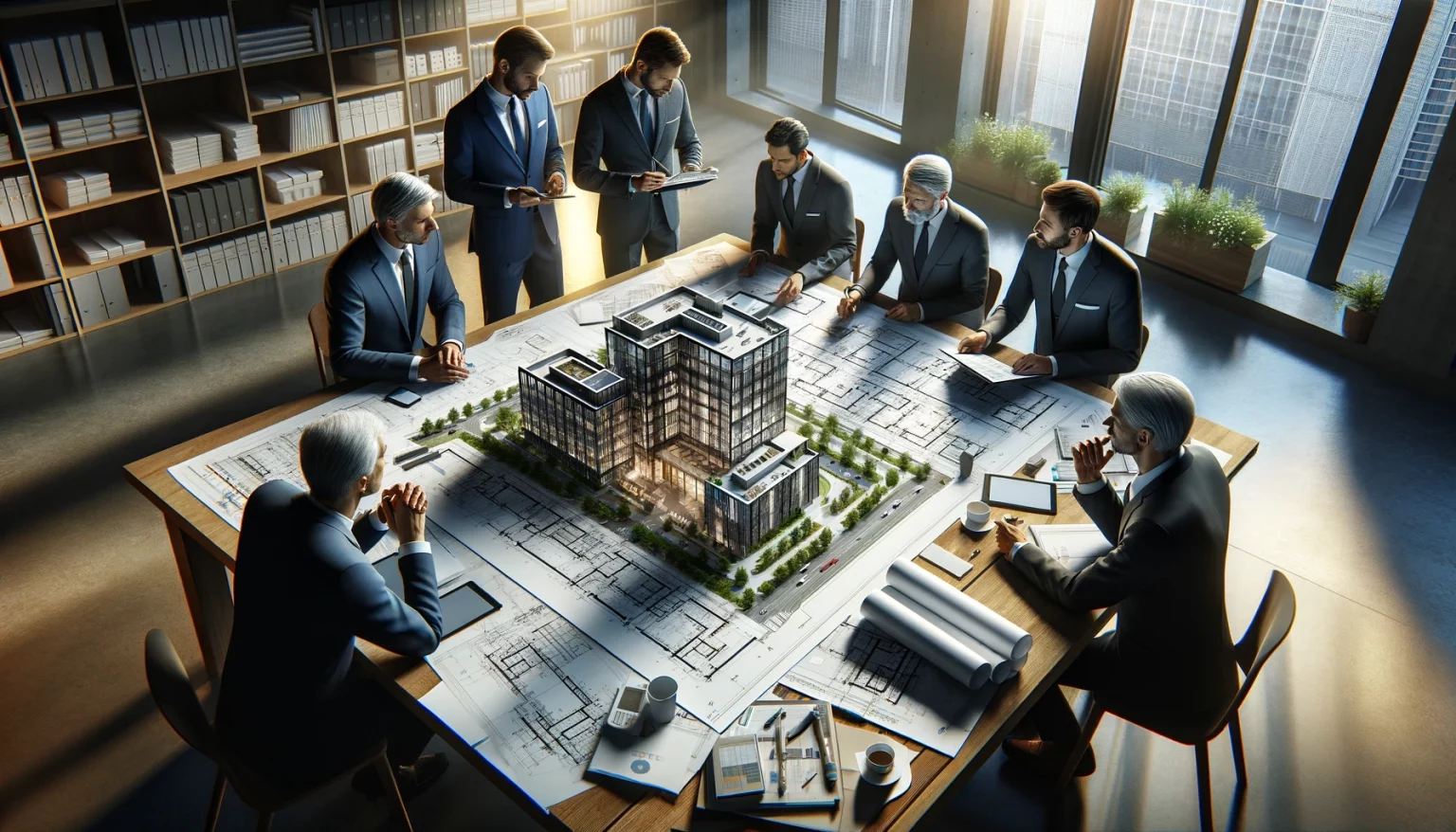
The plans generated on the basis of the BIM - Building Information Modeling - working method can be enriched in the final service phase to create a BIM as-built model. Here, only the information, processes and objects required for implementation are initially triggered and the model is "cleaned up". Only in the second step is a comparison made between the existing plans and real conditions. As a rule, this is done by taking random measurements at points where several dimension lines converge. Due to the continuous nature of the enhancement of the digital twin, minimal deviations are negligible in practice and the significantly lower costs of creating the 3D model by using existing plans means a shorter amortization period for the customer.
Subsequent recording of existing objects
The need for a digital twin may sometimes only be recognized at a late stage and therefore not have been part of the commissioned service. However, other scenarios include existing buildings, or a lack of depth in the BIM model (e.g. architects models of Lph. 2-4), making the use of the existing model either not possible or profitable. Therefore, a digitized representation of physical works can also be developed retrospectively if existing buildings & facilities are fully recorded and enriched with existing data. This is usually done using a combination of a "smoothed" point cloud created using optical, radar-based and laser-optical surveying methods, as well as point measurements. Just as with the BIM as-built model, an adaptation to changing real conditions must also be made here and an update of the GIS and model is therefore unavoidable. However, in addition to the significantly higher costs of such a recording, the lack of depth of information in the components is also a significant factor that is only compensated for over a longer period of use.
advantages of the digital twin
The combination of real objects with digital models trivializes analysis. Concepts can be validated in advance and processes and workflows can be extensively tested as part of the virtual mapping. The time factor can already be minimized in the planning phase. The most important advantages of the digital twin are defined in this regard:- Increased efficiency & quality - Permanent updating enables optimal operating parameters to be determined- Flexibility - Simulation options and long-term planning enable forward-looking capacity calculations for flexible use- Risk minimization - As with BIM, risk reduction is achieved through the high planning depth - Benchmarking - Serves to ensure comparability with other properties
We have compiled a small selection of our project activities for you here. Please contact us for further references if you are looking for a specific topic!